

Human-Centered Evolution™ began as a question, not as a model.
One question kept returning,
in organization after organization.
Why do systems full of capable, committed people so often produce results none of them intended?
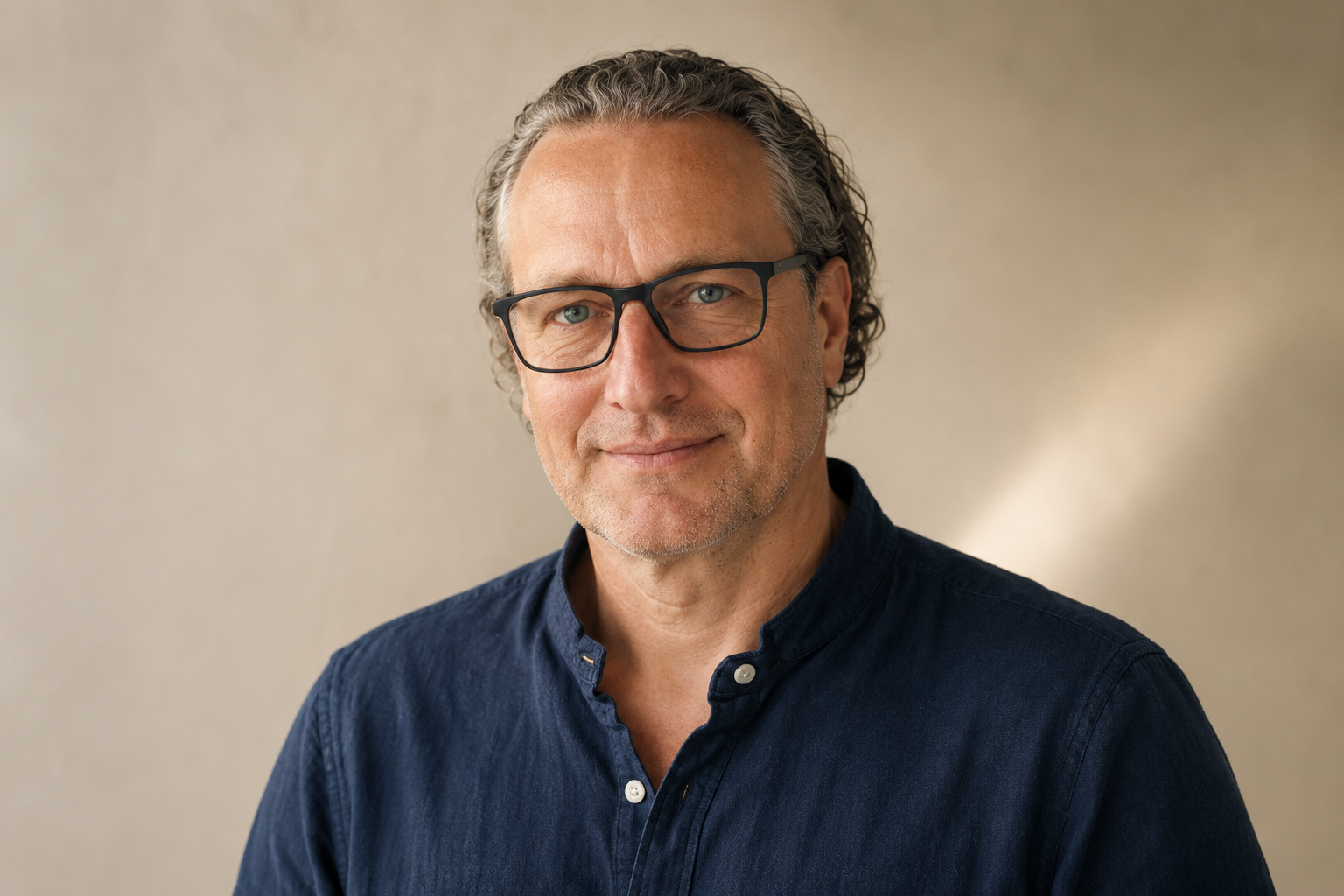
This question did not arrive in a single day. It seeped in. Over two decades — inside corporations, in leadership roles and beside them — the same scene repeated in ever new rooms: sharp minds, honest intentions, maximum energy. And in the end, an outcome that took on a momentum of its own. No one had wanted it. Everyone had contributed to it.
Some of those years were spent in the middle of Bayer's Dynamic Shared Ownership transformation — a radical, serious attempt to reorganize a global corporation entirely around trust and Ownership. What I learned there was less about change itself, and above all about what it shatters against: the invisible conditions beneath the surface. A new mission statement, a strategic announcement — none of it reaches that deep structure.
During that time, my scientific background weighed heavier than I had ever expected. Living systems cannot be prescribed into health. They respond only to the environment that surrounds them.
Through this lens, organizations suddenly no longer looked like defective machines in need of repair. They seemed like sensitive ecosystems, producing exactly what their soil allows: teams that strain harder and harder yet move slower and slower. Leadership, coaching and systems thinking added nothing artificial to this view. They were the lenses that confirmed it — each from a different direction.
The conversations were always different. The underlying conditions rarely were.
Almost no one was doing anything wrong. The results were still being produced by something no one had designed.
Sustainable Performance and Human Development emerge from the same conditions.
Human-Centered Evolution is what those observations eventually became when they were given language. It is not a finished body of knowledge. It is a working way of seeing — still being tested, still being corrected by the organizations it meets.
What if organizations were designed to evolve continuously — instead of painfully transforming every few years?
Human-Centered Evolution did not begin as an abstract theory. It emerged slowly. From years of watching organizations succeed, struggle, and quietly limit themselves — and from recognizing that the same observation kept returning from very different directions:
- The science
Teaches us how living systems sustain themselves — through healthy conditions, never through rigid control.
- Leadership practice
Shows us, in everyday work, where real performance is created — and where it is quietly consumed.
- The evolution catalysts
Reveal that change rarely fails because of conscious resistance, but because the old conditions simply persist.
Human-Centered Evolution emerges exactly where these three viewpoints converge on the same core.
In an era where technology is accelerating rapidly, this perspective is more urgent than ever. Human-Centered Evolution is not the product of a quick idea. It is the result of a long search for a more human path to sustainable performance.
Rooted in living systems, complexity science and modern research on human development.
Human-Centered Evolution is informed by living systems thinking, complexity science and research on human development. The science supports the story. It does not replace it.
Three traditions shape this work: living systems, complexity science and adult development.
Where the observations come from.
Two decades inside organizations
Long enough to see the same dynamics return in very different rooms.
A scientific training
A habit of observing before concluding, carried over from living systems into human ones.
Leadership across cultures
Seeing where performance is created — and where it is quietly consumed.
Change experienced from the inside
Not as an observer of transformation, but as someone inside it.
The framework is new. The experience behind it is not.
That is how I think. What it is like to work this way is a different question.